
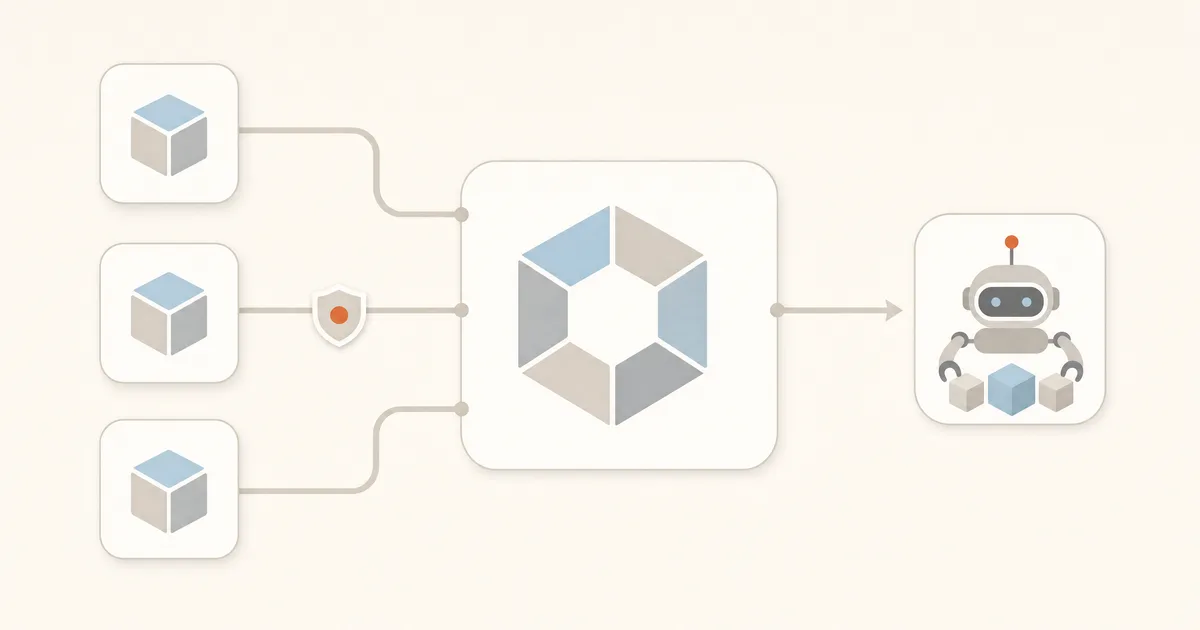
Update, 3 October 2026: the wait is over. We have open-sourced more than 50 Laravel packages, free, MIT-licensed and fully documented.
Open source stopped being a philosophical side-quest a long time ago. It is now the substrate the entire industry runs on: the frameworks, the databases, the language runtimes, the build and CI tooling, and increasingly the AI models and the agents that write code on top of them. Almost every product shipped this year stands on a foundation that someone, somewhere, published for free and maintains in the open. We have built on that foundation for two decades, and we are now preparing to give a serious amount back. This piece is partly about why open source matters more than ever — and partly a heads-up worth reading to the end.
Why open source became the center of gravity
Modern software is assembled far more than it is written. A typical production application is a thin layer of business logic resting on hundreds of open packages — the HTTP layer, the ORM, the queue, the auth scaffolding, the date library, the test runner. None of that is written from scratch anymore, and that is a good thing. The value a team adds is its domain logic; everything underneath is a solved problem best solved once, in public, by people who specialize in it.
The economics compound in a way closed software never could. Every team building on a shared open foundation inherits the bug fixes, the performance work and the security patches of everyone else building on the same foundation. A subtle race condition found by a company on another continent becomes your fix on your next update. That shared maintenance, plus no vendor lock-in and the ability to read and change every line you depend on, is why open source moved from the margins to the default. The question stopped being whether to build on it and became how to build on it well.
Open source is the substrate agentic coding runs on
AI coding agents are only as good as the materials they are handed. When an agent reaches for a package to solve a sub-task, the quality of that package decides whether the agent produces working code or a plausible-looking mess. This is the part of the AI conversation that gets too little attention: the model is not the only variable. The ecosystem it draws on is at least as important.
Well-built open packages give an agent reliable building blocks in four concrete ways:
- Documentation the model can read — clear READMEs, worked examples and a stated contract give the agent something to follow instead of something to guess. A package whose behavior is written down is one the model can use correctly on the first attempt.
- Strong typing — typed signatures narrow the space of valid calls and give immediate, machine-checkable feedback. The agent (and the type checker behind it) catches a wrong call before it ever runs, instead of discovering it as a production error.
- Stable, predictable APIs — consistent naming means the model retrieves the right symbol rather than inventing a method that never existed. Most agent hallucinations in code are not deep failures of reasoning; they are reasonable guesses against an inconsistent or undocumented surface.
- Tests as executable specification — a package with a real test suite shows the agent exactly how it is meant to be used, and lets the agent verify its own output by running them.
The opposite case is where things go wrong. Undocumented, loosely typed, inconsistently named code forces the agent to guess, and guessing is precisely where hallucinations, reinvented wheels and slow back-and-forth iteration come from. A strong open ecosystem quietly removes most of that friction. It is also why the agentic systems we build lean on well-typed, well-documented foundations rather than bespoke glue — the agent spends its budget on the actual problem, not on rediscovering how a dependency works.
Vibe coding rides on packages it never reads
Vibe coding — generating software from natural language without reading the code that comes back — works to exactly the extent that the generated code leans on solid open foundations. When an agent composes a feature out of mature, battle-tested packages, most of the output is code that has already survived contact with thousands of other production systems. When those foundations are missing or weak, the agent has to invent more bespoke glue, and that freshly minted, unreviewed glue is precisely the brittle layer that collapses the first time it meets real users, real data and a real attacker.
So the health of the open ecosystem is not a niche concern for maintainers; it directly determines how much an AI agent has to invent and how much it can simply assemble. The better the packages underneath, the less guesswork ends up in your codebase. That is the strongest practical argument for investing in open source right now: it is the difference between AI that accelerates good engineering and AI that mass-produces technical debt.
Open source is not automatically secure
There is a comfortable myth that open source is secure because so many eyes review it. That is half true, and the missing half matters. Many eyes can review open code — but they only help if someone is actually looking. Several of the most damaging supply-chain incidents of recent years happened entirely in the open: a typosquatted package one character away from a popular name, a maintainer account compromised and used to publish a tainted release, a backdoor patiently slipped into a widely used utility. The code was public the whole time. The problem was that almost nobody was auditing the specific dependency that got hit.
What open source actually gives you is the possibility of security, which closed software cannot offer at all. You can read every line you depend on, pin every version, verify every artifact and review every change before it reaches production. That is an enormous advantage — but possibility is not a guarantee. Security is the result of discipline applied to that transparency, not a property you inherit for free by choosing a permissive license. The honest framing is this: open source is more secure than closed software when, and only when, it is configured and audited correctly.
What disciplined auditing actually looks like
Turning the possibility of security into actual security is unglamorous, repeatable work. In practice it comes down to a handful of habits that run continuously rather than once a quarter:
- Dependency hygiene — knowing exactly what you depend on, keeping it current, removing what you no longer use, and treating an unmaintained dependency as the liability it is.
- Automated vulnerability scanning — advisories checked on every push, so a newly disclosed flaw in a transitive dependency surfaces the same day rather than months later.
- Pinned and verified versions — lockfiles, integrity hashes and a reviewed upgrade path, so a compromised release cannot slip in silently between deploys.
- CI security workflows — static analysis, secret scanning, style checks and the full test suite running on every change, set to block the merge when something is wrong rather than warn after the fact.
- Reading the code you adopt — for anything load-bearing, a human who understands the threat model reads the dependency before it ships, instead of trusting the star count.
None of this is exotic; it is simply engineering discipline made routine. It is the same discipline we bring to client code in our security audits, and the same standard we hold our own libraries to. Open source earns its security reputation only where this work is done — and it is entirely doable.
How we build — and what we are preparing
For more than twenty years we have built production software on open foundations, and we are not vibe coders. The difference between us and a demo generator is exactly the discipline described above: architecture chosen for the problem, code reviewed by people who have operated systems for decades, tests that encode requirements, and security treated as a property to be proven rather than assumed.
We are now preparing a substantial body of open source work aimed squarely at the Laravel ecosystem. We are deliberately not announcing names, scope or timing yet — but we will say what it is not. It is not throwaway code dressed up as a library, and it is not a pile of vibe-coded snippets pushed to a registry to look productive. It is production-grade, heavily tested, statically analyzed and audited under the same continuous-integration checks we just described. It is built to a standard we would be comfortable depending on ourselves, because we will be.
The details — what we are releasing, on what cadence, and how to use it — will land here on this blog and on our social channels, and there is more of it coming than a single post can hold. If you build on Laravel, or you simply care about where serious open source is heading, the practical takeaway is short: check back often, and follow along. The announcements start here.
In the meantime, the way we work is on full display in the software we ship for clients — the same web applications and security audits that hold our open source to its standard. Bookmark the blog, follow our channels, and you will not miss the announcement when it lands.